
When seven-year-old Peter Carmine Picknelly traveled from Italy with his family and settled in New Jersey, little did he know that travel would become the Picknelly family’s life and legacy. Now four generations later, the Picknelly family still owns and operates Peter Pan Bus Lines, one of the largest privately-owned bus companies in the United States.
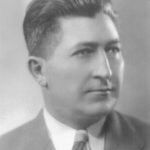
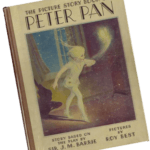
Peter C. Picknelly started his transportation career as a private chauffeur in the early 1900s. In 1920, he set out on his own to start his first small transit company: Orange Valley Bus Company of East Orange, NJ. That was just the beginning. Five years later, Peter and three other partners pooled their resources, relocated to New England and opened a larger transportation service in Hartford, CT, named Interstate Busses Corporation. In 1932, Peter sold his interest in Interstate Busses to his partners, and opened his own independent bus line in Springfield, MA in the spring of 1933. He named his new company “Peter Pan Bus Lines” after his children’s favorite bedtime story, “Peter Pan” by Sir James M. Barrie.
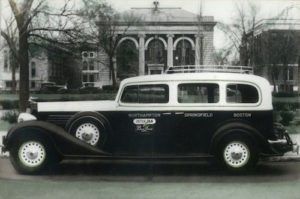
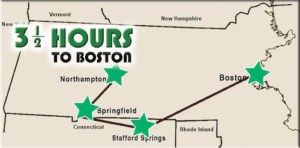
Peter Pan’s original fleet consisted of four 1933 Buick jitney vehicles, and offered service between Northampton and Boston via Stafford Springs, CT, a long route that took more than 3.5 hours with a fare of only $1.75. It was quite the bargain. In 1940, Peter Pan won approval from the State of Massachusetts to operate from Springfield, MA directly to Boston via Route 20, cutting the travel time to a more manageable 2.5 hours.
Peter Pan Bus Lines grew rapidly and during the 1940s more family members relocated from NJ to MA to help expand Peter’s business. Peter’s brother Bill Picknelly became the first maintenance garage supervisor. Bill’s son Carmen Picknelly joined Peter Pan after World War II. Upon the passing of Carmen, his son Tom Picknelly managed Peter Pan Maintenance up until his passing in 2020. Today, the tradition continues as Tom’s son Joe Picknally, oversees all Peter Pan Maintenance Facilities.
The opening of the Massachusetts Turnpike in 1957 allowed Peter Pan to expand bus service between Springfield and Boston by reducing travel time to under two hours. Passengers realized that the bus was as quick as an automobile and faster than a train. It was also more affordable, convenient and soon became the most efficient mode of public transportation for travelers. In 1963, Peter Pan’s sales soared to $1 million dollars, service was expanded, and a fleet of 28 buses were on the road.
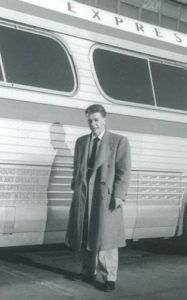
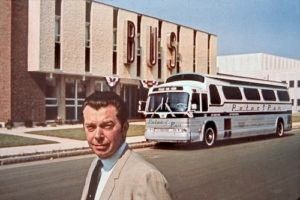
The journey ended for Peter C. Picknelly in January of 1964. Peter Pan’s founder died and the company’s leadership was passed on to his 33-year-old son, Peter Louis Picknelly. Peter L. Picknelly was an innovative and energetic “bus guy” who had dreams of his own. He saw great opportunity when the 1964-1965 World’s Fair was coming to New York City, and he created World’s Fair Tour Packages. These included an all-inclusive one-day tour of the World’s Fair. It was a phenomenal success and became an instant financial asset for Peter Pan. That was the beginning of the first travel and tour division of the company: Peter Pan World Travel Service.
Operations grew steadily and in 1969, Peter L. made the decision to construct a new bus terminal in Springfield, MA. It was Peter Pan’s first major bus terminal and the first terminal in the United States to include both Greyhound and Trailways bus service under one roof. It’s design concept is attributed to the development of modern day intermodal transportation.
Peter Pan continued to expand charter and tour offerings throughout the 1970s and 1980s, which at one point accounted for two-thirds of the company’s overall sales.
In the 1980s, Peter Pan acquired more than a half-dozen transportation companies in New England. In 1982, Peter Pan established Coach Builders, the only bus body shop in the Northeast, which offered complete repair and restoration services for its own fleet and other companies fleets as well. Today, Coach Builders is still the largest bus rehabilitation facility in the Northeast.
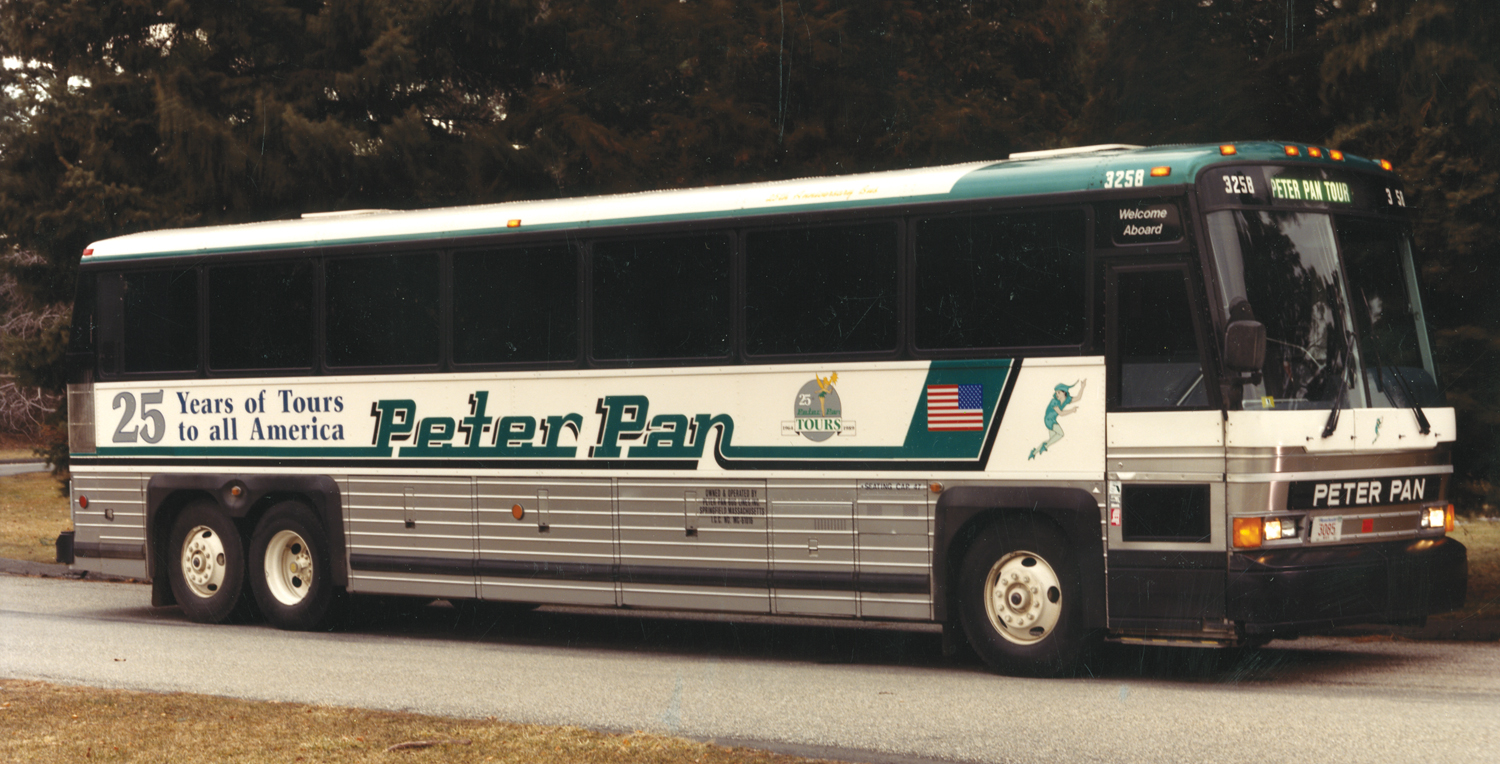
In 1985, Peter Pan doubled its scheduled bus service with the acquisition of Trailways New England. The decision allowed Peter Pan to expand it’s New England bus service into New York City for the first time. New York City is still Peter Pan’s number one destination today. By the end of the 1980s, Peter Pan had office and garage locations in Boston, Worcester, Springfield, MA, and Central CT with more than 500 employees and 150 buses in the fleet.
Peter Pan Bus Lines has established an excellent reputation for quality service and safety through the years, and has become a trusted source of transportation for high-profile events. In 1992, Peter Pan Bus Lines was selected to transport Presidential Candidate Bill Clinton and his running mate Al Gore for the “First 1,000 Miles” of their historic whistle stop bus tour from the convention in New York City to America’s Heartland. This news inspired national media coverage for Peter Pan and a Peter Pan Bus float was part of the Inaugural Parade in Washington, DC. Other notorious rides hosted by Peter Pan included Chelsea Clinton’s wedding, Senator Ted Kennedy’s funeral, and Peter Pan’s VIP Limo Coach carried Senator Bernie Sanders along his campaign trail during his 2016 presidential campaign.
During the 1990s, Peter Pan acquired American Coach Lines in Washington, DC and opened an office and maintenance facility in Our Nation’s Capital. This move prompted further expansion of bus service to Baltimore, Philadelphia and other mid-Atlantic cities. Peter Pan’s new service provoked competition with Greyhound Bus Lines, and sparked national attention to “fare wars” between the two companies. Peter Pan and Greyhound lowered the New York to D.C. fare to only $5… and thousands of daily passengers took advantage of the incredible fare.
The new Millennium brought even more success and growth for Peter Pan. In 2000, Peter Pan Bus Lines’ Chairman Peter L. Picknelly was awarded the Ernst & Young Entrepreneur of the Year Award, the world’s most prestigious business award for entrepreneurs.
In 2001, the company opened new offices and a maintenance facility in Secaucus, NJ serving metro NYC.
By 2003, Peter Pan doubled in size with the acquisition of the New England division of Coach USA, which incorporated Arrow Line, Boston Coach and Bonanza Bus Lines (formerly known as Interstate Busses Corporation … ironically, Peter C. Picknelly’s original bus line). This purchase expanded Peter Pan’s fleet to more than 300 coaches, and sales topped $2 million dollars per week.
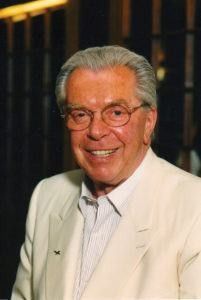

In 2004, another page was turned and a new chapter began with the sad news that Peter L. Picknelly had passed. The legend continued as the helm was passed on to Peter L.’s son, Peter A. Picknelly, the third generation leader of Peter Pan Bus Lines.
Always a leader in technology, by 2008 Peter Pan was the first bus company in the United States to offer “print at home” tickets sold on the internet. Customers could buy their tickets in advance and go straight to the bus side for boarding. No longer did they have to stand in line at a bus terminal to purchase a ticket.
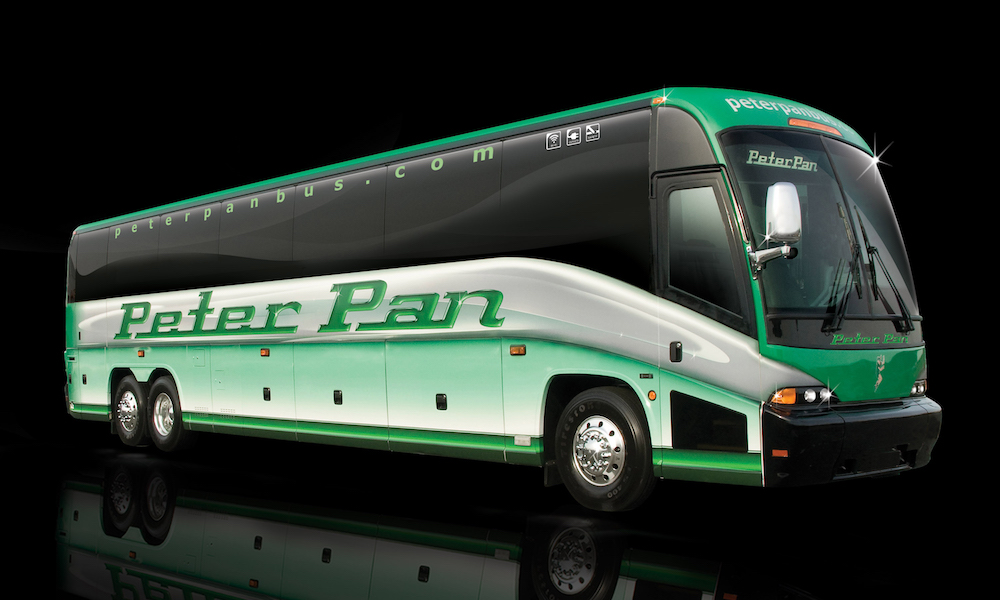
Over the next several years, major inroads in “creature comforts” aboard the buses were enhanced. New exterior graphics and a custom-designed interior featuring specially designed seats for extra leg room … new, spacious lavatories … enhanced baggage capacity …upgraded lighting … charging outlets at every seat and free Wi-Fi for passengers to use their electronic devices while traveling. Today, Peter Pan boasts one of the most modern fleets in the bus industry.
In 2015, Peter Pan expanded its presence on Cape Cod by instituting service between Boston, Logan Airport and Hyannis, MA. In 2019, Peter Pan further expanded its Cape Cod service to include Provincetown, MA and now serves all major towns on Cape Cod.
In 2018, Peter Pan expanded their foot print in New York City by opening its first ticket counter at New York’s Port Authority Bus Terminal with office space and additional bus gates. The Port Authority is the largest bus terminal in the United States and one of the busiest terminals in the world, serving 8,000 buses and 225,000 people on an average weekday and more than 65 million people a year.
Also in 2018, Peter Pan moved its corporate headquarters and bus operations to the newly renovated and historic Union Station in Springfield, MA. To celebrate this move, as well as Peter Pan’s 85th Anniversary, the City of Springfield named the bus entrance way into Union Station 1 Peter Pan Way.
Peter Pan continues to improve intercity bus travel for its customers through advances in technology and safety. Our bus fleet is equipped with advanced engines and are the most fuel efficient large vehicles on the road today with GPS systems to track vehicles, eliminate unnecessary idling, and to monitor speed and breaking.
Several innovative concepts emerged in recent years, including the first company in the United States to guaranteed seating to ensure that every passenger gets a reserved seat on the bus. Mobile boarding is now in place for all schedules allowing passengers to purchase their tickets and change reservations online through Peter Pan’s website or mobile APP.

Peter Pan was also the first bus company to install safety belts and introduce a fire suppression system in its fleet of buses.
All Peter Pan buses feature a state-of-the-art on-board, multi-camera security system and a unique Advanced Driver Assistance System (ADAS) that features a collision mitigation camera radar system with stationary vehicle braking, lane departure warning, traffic sign recognition and more.

Peter Pan’s highly-trained drivers have been recognized by the National Safety Council for their achievements in safety. Peter Pan is proud to employ some of the best drivers in the industry. Many of our drivers have achieved One-Two-Three-and-Four Million Miles without an accident. Peter Pan is very proud to have the only drivers in the United States to have achieved 48 years/Four Million Miles of accident-free driving . To put this in perspective, one million miles equals at least 12 years of accident-free driving.
2020’s: The 4th Generation Takes the Wheel
Peter A. and Melissa Picknelly’s children joined the company. Lauryn Picknelly-DuBois as the Controller and Peter B. Picknelly IV as the Director of Safety & Security. The family tradition continues with the 4th generation securely in place.
Today, Peter Pan operated the largest privately owned bus transportation network in the United States with over 1,000 daily departures to over 100 destinations in the Northeast and Mid-Atlantic states. Peter Pan coaches travel over 25 million miles every year, or the equivalent of nearly 100 trips to the moon annually. That translates to one of Peter Pan’s buses traveling around the world three times every day.
*Interstate Buses Corporation continued to flourish and expand. In the 1970’s, it changed its name to Bonanza Bus Lines. Peter Pan acquired Bonanza Bus Lines in 2003.


 CLICK HERE to open a customer support request.